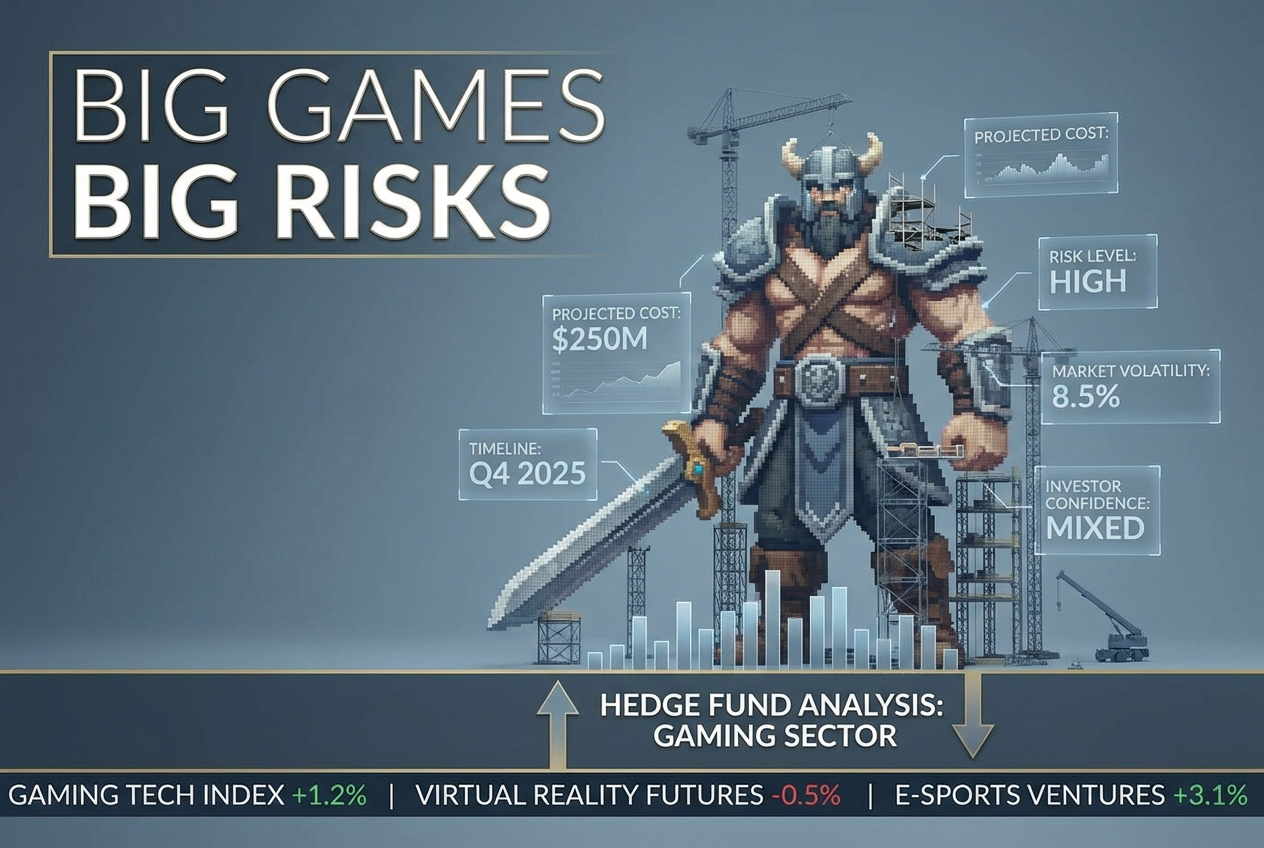
For much of gaming history, major franchises released new entries every one to three years. Today, that rhythm has slowed dramatically. Some of the biggest brands in the industry now go half a decade—or longer—between major releases.
This shift isn’t accidental. It reflects deeper changes in how games are made, funded, and sustained.
So why are big game franchises releasing fewer new games?
Quick Answer
Big game franchises are releasing fewer new games because development costs, production timelines, and financial risk have increased dramatically.
Publishers now prioritise longevity, live-service monetisation, and brand stability over frequent sequels, making fewer but larger releases the safer business strategy.
The End of the Fast Sequel Era
In the 2000s and early 2010s, franchises like Assassin’s Creed, Call of Duty, and GTA released new titles at a rapid pace. Smaller teams, simpler technology, and lower expectations made that possible.
Today, AAA development looks very different.
Mini-summary: What once took two years can now take seven.
1. Development Cycles Have Grown Exponentially
Modern AAA games often require:
- 5–8 years of development
- Hundreds or thousands of developers
- Multiple studios across continents
As visual fidelity, animation quality, and world complexity increase, iteration slows and risk rises. Releasing games more frequently is no longer feasible without compromising quality.
This is why franchises like Grand Theft Auto and The Elder Scrolls now operate on decade-long timelines.
2. Budgets Are Too High to Fail
Many modern AAA games now cost $150–300 million before marketing. At that scale:
- One underperforming release can destabilise a studio
- Publishers become more risk-averse
- Fewer projects are greenlit overall
Instead of releasing multiple mid-scale entries, companies bet everything on fewer blockbuster launches.
Mini-summary: Fewer games, but each one carries enormous pressure.
3. Live-Service Models Replace Sequels
Rather than releasing new games, many franchises now extend a single title for years.
Examples include:
- Ongoing updates instead of sequels
- Seasonal content replacing expansions
- Monetisation spread across long timelines
Games like Fortnite, GTA Online, and Destiny 2 show how one platform can generate revenue longer than multiple traditional releases.
From a business perspective, this is safer than launching something new.
4. Player Expectations Have Changed
Modern players expect:
- Bug-free launches
- Massive worlds
- Ongoing post-launch support
- Regular updates and fixes
Rushed sequels are punished quickly. Social media, streaming, and review cycles amplify every flaw, making publishers cautious about releasing games before they are “ready.”
5. Franchises Are Becoming Platforms, Not Products
Many major franchises are no longer treated as standalone games. They are:
- Long-term ecosystems
- Monetisation platforms
- Brand pillars for publishers
This is especially true for franchises owned by companies like Electronic Arts, Ubisoft, and Activision.
When a franchise becomes a platform, frequent sequels become unnecessary—and sometimes harmful.
6. Fewer New Entries, More Remakes and Remasters
Instead of new games, publishers increasingly release:
- Remakes
- Remasters
- Definitive editions
These projects:
- Cost less
- Carry less risk
- Leverage existing brand awareness
This helps maintain visibility while larger projects remain in development.
7. Internal Studio Changes Matter Too
Many studios have also:
- Reduced crunch culture
- Improved work-life balance
- Rebuilt pipelines after layoffs or restructuring
These changes are positive, but they extend timelines and reduce output.
Mini-summary: Healthier development often means slower releases.
What This Means for Players
What Players Gain
- More polished releases
- Longer support cycles
- Deeper post-launch content
What Players Lose
- Fewer new entries
- Longer waits between sequels
- Less experimentation in major franchises
What This Means for the Industry
Likely Going Forward
- Fewer AAA releases per franchise
- Larger gaps between sequels
- More live-service and platform-style games
Less Likely
- Annual releases across most franchises
- Rapid sequel turnarounds
- Frequent reinvention of core brands
Final Verdict
Big game franchises are releasing fewer new games because the economics of AAA development have fundamentally changed. Rising costs, longer timelines, and higher risk have pushed publishers toward safer, slower, and more sustained strategies. While this means longer waits for players, it also reflects an industry adapting to its own scale.
The era of frequent sequels isn’t over—but it’s no longer the default.
Frequently Asked Questions
Are fewer games being made overall?
At the AAA level, yes. At the indie level, output remains strong.
Is this bad for players?
Not necessarily. Fewer games often means more polished ones.
Will annual franchises disappear completely?
No, but they are becoming rarer and more conservative.
Are live-service games replacing sequels?
In many franchises, yes.
Leave a Reply