Category: Jaxon

  • The Most Broken Cards in FC 26 (Predictions + Real Examples)

    The Most Broken Cards in FC 26 (Predictions + Real Examples)

    Quick Answer

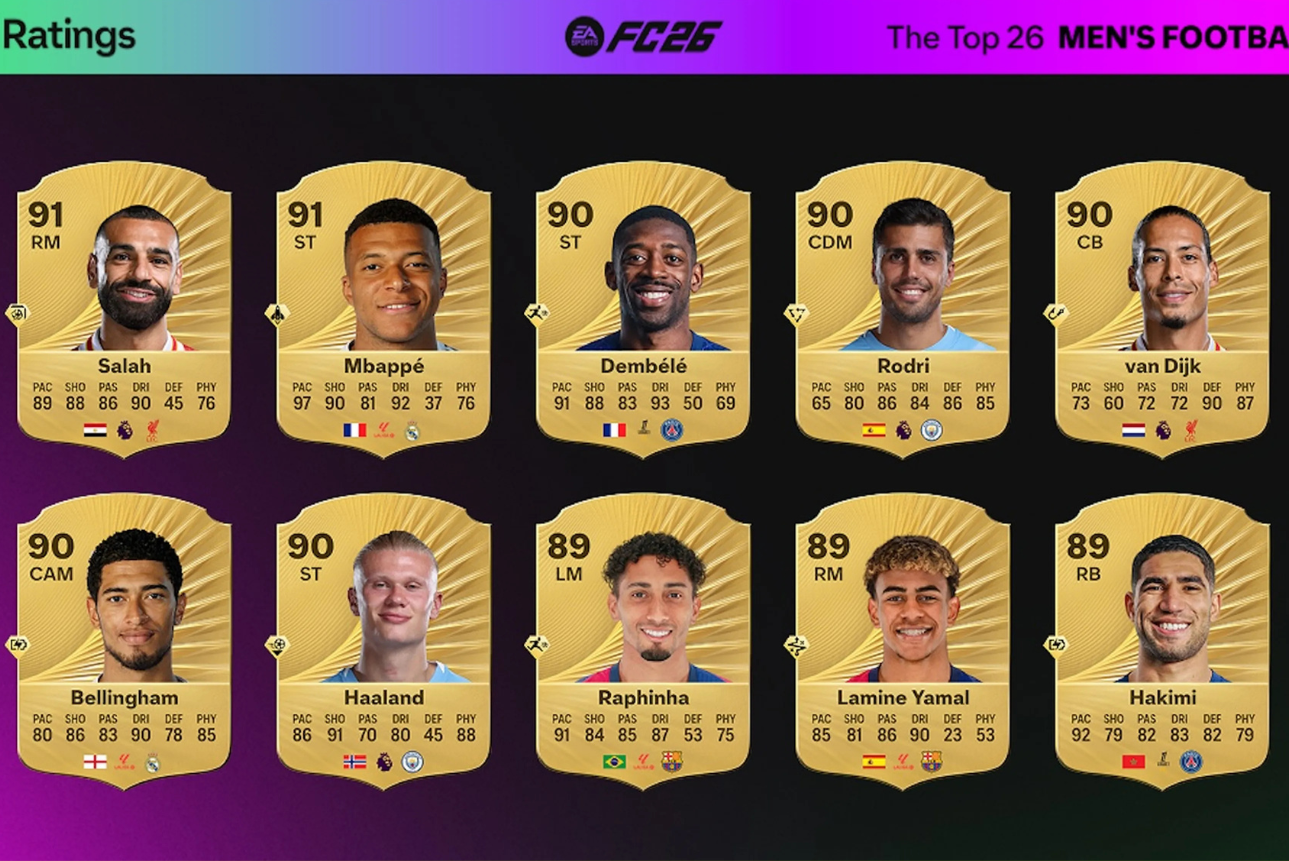
    FC 26 is expected to include several “broken” cards — players whose pace, dribbling, animations, and meta-friendly traits make them ridiculously overpowered. Based on trends from FC 24 and FC 25, cards like Mbappé, Neymar, Musiala, Valverde, Van Dijk, Hakimi, and certain Evolutions-boosted silvers will likely dominate early and mid-game metas.


    What Makes a Card “Broken” in FC 26?

    A “broken” card is one that performs far above its rating due to:

    • Overpowered pace or acceleration
    • Unique animations (dribbling, shooting, jockeying)
    • Meta body types
    • Hidden in-game stats
    • Evolutions upgrades
    • Perfect chem links
    • Traits that stack with gameplay mechanics

    These cards feel unstoppable no matter who you play against.


    Predicted Most Broken Cards in FC 26

    1. Kylian Mbappé — The Eternal Meta King

    If there’s one guarantee every year, it’s this:
    Mbappé will be broken.

    Expected strengths:

    • 95+ pace
    • Glitchy dribbling animations
    • Auto-acceleration bursts
    • Elite shooting from awkward angles
    • Strength + agility combo nobody else has

    He will be the player everyone fears on Weekend League.


    2. Neymar Jr. — Still the Dribbling Cheat Code

    Even with lower physicality, Neymar always breaks the game.

    Why he’ll be OP again:

    • Five-star skills
    • Unique dribble animations
    • Small meta body type
    • Insane left-stick control
    • “Invisible” silky turns that beat every defender

    Neymar cards always feel better than the stats suggest.


    3. Jamal Musiala — The New-Gen Meta Monster

    Musiala became a meta darling in FC 25 — expect FC 26 to push him even harder.

    Predicted strengths:

    • Elite dribbling
    • Long, glitchy stride animations
    • Great links to Bundesliga teams
    • Perfect CAM/CM versatility
    • Great Evolutions potential

    Musiala is shaping up to be the next big yearly meta player.


    4. Federico Valverde — The Midfield Freight Train

    Every year, Valverde gets a card that feels illegal in midfield.

    Why he’s broken:

    • Incredible pace for a CM
    • Auto-block animations
    • Defensive awareness far beyond his rating
    • Long legs = extended tackle reach
    • Works in every meta formation

    Expect his early gold, promos, and TOTW cards to be elite.


    5. Virgil van Dijk — The Wall That Moves

    Van Dijk’s body type + defending animations make him terrifying.

    Why he’s always OP:

    • Huge tackle radius
    • Dominant strength
    • Bulls players off the ball effortlessly
    • Perfect jockeying animations
    • Aerial dominance bordering on unfair

    Every year he becomes a Weekend League nightmare.


    6. Achraf Hakimi — Pace Merchant Supreme

    Hakimi breaks fullback metas every cycle.

    Expected strengths:

    • 94+ pace
    • Strong tackling animations
    • Perfect overlapping and interception AI
    • Links to PSG players (Mbappé, etc.)

    Even his base gold card will feel like a promo.


    7. Evolutions Meta Cards — The Sleeper Overpowered Picks

    Some of the most broken FC 25 cards came from Evolutions, such as:

    • Silver strikers boosted to 88+
    • Fullbacks turned into elite CDMs
    • Low-rated midfielders turned into monsters

    Prediction:
    FC 26 will again make several low-rated players game-breaking through Evo upgrades.

    Possible OP Evo candidates:

    • Nicolas Jackson
    • Xavi Simons
    • Rayan Cherki
    • Arda Güler
    • Levi Colwill

    These will dominate early meta squads.


    Real Examples of Historically Broken Cards

    To show the pattern, here are some legendary OP cards from recent games:

    • EA FC 25: Centurions Mbappé, Evo Saka, Fantasy Musiala
    • EA FC 24: TOTY Hakimi, Gold Neymar, RTTK Dembélé
    • FIFA 23: Winter Wildcards Saint-Maximin, Path to Glory Al-Owairan
    • FIFA 22: TOTY Mbappé, FUT Birthday Ronaldo

    The trend is clear: pace + dribbling + animations = broken.


    Why Broken Cards Will Keep Happening

    Because they drive:

    • Pack sales
    • Weekend League participation
    • Content creation hype
    • Squad-building meta rotation

    EA needs absurd cards to keep Ultimate Team engaging.


    FAQ

    Q: Will Evolutions return in FC 26?
    Highly likely — it was one of the most popular features ever added.

    Q: Are broken cards pay-to-win?
    Not necessarily. Some evolutions and TOTW cards become meta without costing much.

    Q: How early do broken cards show up?
    Usually within the first two weeks — especially pace-heavy attackers.

    Q: Can budget players get OP cards?
    Yes — Evolutions and early promo SBCs usually offer great meta options.


    Conclusion

    FC 26 will undoubtedly bring a new wave of broken cards — players who feel unstoppable thanks to pace, animations, body type, traits, and Evo boosts. Expect Mbappé, Neymar, Musiala, Valverde, Van Dijk, and Hakimi to dominate the early game, while Evolutions will create surprise meta stars from unlikely low-rated players.
    No matter how balanced the game tries to be, one truth remains: Ultimate Team will always find a way to break itself — and players love it.

  • The Business of Football: Why Clubs Are Now Media Companies

    The Business of Football: Why Clubs Are Now Media Companies

    Football clubs are no longer just sports teams — they’ve become global media brands, content studios, and entertainment ecosystems. As the 2025 season unfolds, top clubs from Europe to the Middle East are transforming how they engage fans, generate revenue, and build long-term brand value. Here’s why the modern football club now operates more like a media company than a traditional sports organization.


    Quick Answer

    Football clubs have evolved into media companies because content is now one of their biggest growth engines. Digital platforms, global fanbases, influencer-style players, behind-the-scenes storytelling, and multi-channel monetization have made media production central to club strategy. This shift increases revenue, strengthens loyalty, and expands reach beyond matchdays.


    What Does It Mean for a Football Club to Be a Media Company?

    A football club today produces and distributes content across:

    • YouTube
    • TikTok
    • Instagram
    • Club apps
    • OTT services (e.g., Barça TV+, MUTV, Juventus TV)
    • Documentaries with Netflix, Amazon Prime, Apple TV
    • Behind-the-scenes series and training-ground content
    • Podcasts and short-form interviews

    This content builds constant engagement — not just during games.

    Mini-summary:

    Clubs are now 24/7 entertainment brands, not 90-minute weekend broadcasters.


    Why Are Clubs Becoming Media Companies?

    1. Global Fanbase Growth

    Top clubs often have hundreds of millions of international fans who may never step inside a stadium.
    Digital media brings them closer through:

    • Match highlights
    • Training clips
    • Mic’d-up moments
    • Player vlogs
    • Multilingual content

    Engagement fuels merchandise, sponsorship value, and global loyalty.


    2. Players Are Influencers Now

    Many footballers have bigger followings than global celebrities.
    Examples:

    • Players post training clips, lifestyle content, and brand collabs
    • Clubs coordinate with players on unified media strategy
    • Personality-driven content increases emotional connection

    Clubs leverage player influence for:

    • New merchandise categories
    • More sponsorship leverage
    • Social-first campaigns

    3. The Rise of Behind-the-Scenes Storytelling

    Series like:

    • All or Nothing (Amazon)
    • Take the Ball, Pass the Ball (Barça)
    • Welcome to Wrexham
    • Sunderland ‘Til I Die

    …show that fans crave access, not just matches.

    This content:

    • Builds parasocial connection
    • Increases transparency
    • Humanizes players and staff
    • Expands club narrative year-round

    4. New Revenue Streams from Media

    Modern clubs monetize content through:

    • Streaming subscriptions
    • Ad revenue
    • Sponsorship integrations
    • Branded documentaries
    • Exclusive behind-the-scenes platforms
    • Social shopping tools

    For some clubs, digital income is growing faster than matchday or ticket revenue.


    5. Multi-Club Ownership = Multi-Content Strategy

    Groups like:

    • City Football Group
    • Red Bull Football
    • 777 Partners

    …use shared media teams to:

    • Create content templates
    • Cross-promote clubs
    • Scale production
    • Build global brand families

    This creates efficiency AND reach.


    How Are Clubs Changing Their Internal Structure?

    Modern clubs now have teams dedicated to:

    • Social media strategy
    • Data analytics
    • Content studios
    • Production & editing
    • Youth creator pipelines
    • Documentary partnerships
    • Fan-platform development

    Some clubs have in-house setups rivaling Netflix-style mini studios.

    Mini-summary:

    Content teams are now as essential as scouting or marketing.


    Which Clubs Are Leading This Media Revolution?

    ⚽ FC Barcelona

    Barça Studios produces documentaries, TikTok-first content, and multilingual shows — part of the club’s identity.

    ⚽ Manchester City

    City Football Group uses unified content strategy across multiple clubs worldwide.

    ⚽ Real Madrid

    Huge YouTube and TikTok audience, global player-driven storytelling.

    ⚽ Wrexham AFC

    “Welcome to Wrexham” made the club a global brand overnight.

    ⚽ Saudi Pro League Clubs

    Al Nassr and Al Hilal leverage superstar players for massive global engagement.


    What Does This Mean for Fans?

    Fans now get:

    • 24/7 access
    • More transparency
    • More connection
    • More personality-driven football content
    • Closer relationships to their favorite players

    Football is becoming a lifestyle and entertainment obsession, not just a sport.


    Conclusion

    Football clubs have officially evolved into media giants. Their ability to create content, tell stories, build global communities, and monetize attention has become just as important as on-pitch performance. As the football industry enters a new era, the most successful clubs won’t just win trophies — they’ll win the content game.

    The future of football belongs to the clubs that master storytelling, digital culture, and global brand-building.


    FAQ

    1. Why are football clubs focusing so much on content?

    Because global fans want 24/7 access, and content is a powerful revenue and engagement driver.

    2. Which club is the best example of a media-first strategy?

    Barcelona, Manchester City, and Wrexham are leading, each in different ways.

    3. How does this benefit clubs financially?

    Content boosts sponsorship value, merchandise sales, digital subscriptions, and global reach.

    4. Are players involved in content strategy?

    Yes — many players are influencers, and clubs collaborate with them to maximize engagement.

    5. Will all clubs eventually become media brands?

    Most professional clubs already are — the level just varies by budget and strategy.

    6. Does on-field performance still matter?

    Absolutely, but off-field media strategy now multiplies the value of sporting success.


  • Is Football Gaming Entering Its Streaming Era?

    Is Football Gaming Entering Its Streaming Era?

    Football gaming is evolving fast — and not just through new gameplay updates or annual releases. Over the past two years, streaming has become the biggest external force shaping how football games are played, marketed, and monetised. Whether it’s EA Sports FC, eFootball, UFL, or smaller indie sims, the modern football gaming audience is gathering not in forums, but on Twitch, TikTok Live, YouTube, and Kick.

    The question is no longer whether football gaming can break into mainstream streaming culture — it’s whether streaming is becoming the primary ecosystem for the genre.


    The Shift: Football Games Are Becoming Streamer-Driven Products

    Unlike earlier eras where football games lived or died by reviews and word-of-mouth, today’s growth is tied to:

    • Live gameplay content
    • Pack openings and UT economy streams
    • Creator-led tournaments
    • Short-form highlight clips
    • Meta breakdowns from top streamers

    Creators now fuel the hype cycle, dictate meta conversations, and influence player spending far more than traditional marketing campaigns ever did.

    For publishers, this means the real battleground is not the game shelf — it’s the livestream feed.


    Why Streaming Has Become Central to Football Gaming

    1. The Creator Economy Has Surpassed Traditional Marketing

    A single TikTok clip of a rare pack pull can outperform an official trailer in reach.
    Creators are now:

    • Driving Ultimate Team (UT) pack engagement
    • Shaping perceptions of gameplay changes
    • Deciding what “meta” looks like week to week

    Game publishers increasingly coordinate patches and promos with peak streamer hours. Football gaming content is effectively “always on.”


    2. Short-Form Video Has Turned Football Games into Viral Engines

    Platforms like TikTok and YouTube Shorts thrive on:

    • Funny glitches
    • Last-minute goals
    • Pack wins and fails
    • Skill-move highlights

    This constant stream of micro-content creates daily retention loops, keeping football games culturally visible even in quiet periods.


    3. Creator-Led Tournaments Are Replacing Traditional Esports

    Esports in football gaming has downsized, but not disappeared — it has shifted.
    We now see:

    • Creator-run leagues
    • Invitational events
    • 8–16 player micro-cups
    • Club-backed creator tournaments

    They cost less, draw bigger audiences, and feel more authentic than expensive esports arenas.
    This “casual esports” model is becoming the standard.


    4. Football Clubs Are Tapping Into Streamers, Not Pros

    Real-world clubs and brands are now signing:

    • Streamers
    • Content creators
    • UT specialists
    • TikTok football influencers

    Because visibility beats pure skill. For clubs, creators offer global reach to young fans who don’t watch full matches anymore.


    5. Live Service Models Fit Perfectly With Streaming Culture

    Modern football games update weekly, not yearly.
    Live-service rhythms perfectly align with streaming cycles:

    • New packs → pack-opening streams
    • Gameplay patches → meta content
    • Seasonal events → daily challenges streams
    • New cards → instant reaction videos

    This continual drip of content is designed to be streamed, not just played.


    The Economics: Why Streaming Is So Valuable to Publishers

    Higher Player Retention

    Players who follow creators stay in the ecosystem longer, returning for every livestreamed update or promo.

    Greater Monetisation Through Social Pressure

    Watching others pack rare players encourages spending.
    This is not accidental — it’s part of the modern football-game economy.

    Lower Marketing Costs, Higher Impact

    A sponsored stream or pack-drop collaboration is cheaper and more powerful than traditional advertising.

    Global Reach With Localised Flavor

    Creators in Brazil, Spain, the UK, the US, and the Middle East grow the game regionally without publishers needing massive regional campaigns.


    What This Means for the Future of Football Gaming

    1. Games Will Be Designed With Streamers in Mind

    Expect more:

    • Replay-friendly animations
    • Viral celebration moves
    • Spectator-friendly modes
    • Highlights-based UI
    • Streamer overlays and integrated camera support

    2. Pack Systems Will Become Even More Central

    Like it or not, UT-style modes are built for streaming.
    Their unpredictability is the content.


    3. New Football Games Will Compete on Creator Support, Not Graphics

    UFL, eFootball, and indie devs will need:

    • Creator payout programs
    • Streamer-mode tools
    • Shareable moment systems
    • Spectator-ready match modes

    The next big “competitor” to EA won’t win with realism — it will win with streamability.


    4. Football Clubs Will Become Media Ecosystems Themselves

    Expect:

    • Club-branded UT tournaments
    • Official team pack promos
    • Influencer X football club partnerships
    • More players reacting to their FC ratings live

    The line between football gaming and football entertainment will blur even more.


    Conclusion

    Football gaming has entered a new era — one driven by streaming, creators, and viral content, not traditional gameplay cycles. The games that win will be the ones that capture attention, reward creativity, and integrate seamlessly into streaming culture.

    For developers, publishers, clubs, and creators, the message is clear:
    Football gaming is now a streaming-first ecosystem. The pitch might be digital — but the audience is very real.

    Question for readers: Which football game do you enjoy watching more than playing — and why?

  • From Messi to Mbappé: The Changing Face of Global Football Stardom

    From Messi to Mbappé: The Changing Face of Global Football Stardom

    The era of Lionel Messi and Cristiano Ronaldo defined more than a decade of football. Their rivalry, brilliance, and dominance shaped the sport’s global narrative, captivating billions of fans. But as one generation steps back, a new wave of stars is emerging — rewriting what it means to be a football icon in the modern age.


    The End of an Era

    Messi and Ronaldo transformed football not just through goals and trophies but through influence. They elevated personal branding, inspired global fan cultures, and turned every match into a media spectacle. Between them, they amassed over 70 major titles and 1,600 career goals, setting records that may never be broken.

    Yet time moves on. Messi, now in the twilight of his career with Inter Miami, continues to draw crowds in the United States, while Ronaldo remains a global ambassador for the game in Saudi Arabia. Their stories now represent legacy — not dominance.


    The New Generation: Mbappé, Haaland, Bellingham

    As the legends fade from the spotlight, a new generation is carrying football into its next era.

    Kylian Mbappé embodies the modern superstar: fast, fearless, and globally marketable. At just 26, he’s already a World Cup champion and one of the most recognizable faces in sport. His recent move to Real Madrid symbolized a new chapter in European football — one centered around youth, athleticism, and global appeal.

    Erling Haaland, meanwhile, represents the rise of data-driven excellence. His incredible efficiency in front of goal and machine-like consistency reflect football’s new era of athletic optimization. At Manchester City, he’s part of a tactical system that maximizes precision and intelligence over flair alone.

    Jude Bellingham, still only in his early twenties, has become Real Madrid’s midfield talisman and a symbol of leadership beyond his years. He bridges the gap between the sport’s tradition and its future, blending discipline, creativity, and humility — traits that resonate deeply with fans.


    The Changing Definition of Stardom

    Today’s football stars live in a radically different ecosystem. The rise of social media, streaming, and digital fandom has changed how players connect with audiences. Unlike the controlled image-making of the Messi-Ronaldo era, modern stars cultivate their brands in real time — through Instagram posts, behind-the-scenes documentaries, and global sponsorships.

    In many ways, fame has become more democratic. Players can now build influence outside of traditional powerhouse clubs or leagues. Think of stars like Vinícius Júnior, Khvicha Kvaratskhelia, or Sophia Smith in women’s football — each with massive followings and global recognition driven by personality and digital reach as much as on-field success.


    Globalization and the New Football Economy

    The globalization of football has accelerated this shift. Streaming services and social media have given fans access to every major league, from the Premier League to the Saudi Pro League and MLS. A player’s popularity is now as dependent on digital visibility as on televised performance.

    Clubs, too, have adjusted — signing players not just for their ability but for their marketability. The line between athlete and brand ambassador has blurred, with players becoming cultural icons, influencers, and even entrepreneurs.


    The Future of Football Stardom

    As we move further into the 2020s, the idea of a single global superstar like Messi or Ronaldo may no longer exist. Instead, the game is entering an era of shared spotlight, where multiple players can dominate attention across different regions and platforms.

    Football’s future will be defined not by one rivalry, but by a network of stars — each representing different styles, cultures, and generations. In that diversity lies the sport’s enduring power: its ability to evolve, inspire, and unite fans worldwide.

  • Top 10 Beginner Strategies to Win More Matches in EA Sports FC 26 Ultimate Team

    Top 10 Beginner Strategies to Win More Matches in EA Sports FC 26 Ultimate Team

    Introduction

    Whether you’re a returning FIFA veteran or brand-new to EA Sports FC 26, the journey through Ultimate Team (UT) can feel overwhelming. With chemistry changes, transfer-market updates, and new gameplay presets, success isn’t just about skill on the pitch — it’s about strategy, patience, and smart decisions off it.

    Here are 10 essential tips to help you build coins, craft chemistry, and start winning consistently in FC 26 Ultimate Team.


    1. Start With Squad Battles and Moments

    Before diving into online modes, warm up in Squad Battles and Moments. They’re the best early coin and pack sources without risking losses in Rivals.

    • Use these matches to test formations, learn player behavior, and build match rhythm.
    • Even on moderate difficulty, Squad Battles can net you 10–15k coins per week.

    2. Focus on Chemistry Links Early

    Chemistry still matters — even after its 2026 overhaul.

    • Prioritize league and nation links when building your starter team.
    • Three-point chemistry boosts make a huge difference in passing and positioning.
    • Don’t chase big names too early; balanced squads with full chemistry outperform superstar lineups with poor synergy.

    3. Pick Meta Formations That Suit Your Playstyle

    Certain formations always dominate early UT metas. In FC 26, the 4-2-3-1 and 4-3-2-1 remain powerful for balance between defense and attack.

    • 4-2-3-1: Ideal for possession players and patient buildup.
    • 4-3-2-1: Suits counter-attacking and quick transitions.
      Experiment in Squad Battles before committing to your favorite.

    4. Master the Transfer Market — Buy Smart, Sell Smarter

    Coins are your lifeblood.

    • Snipe undervalued players during high-traffic hours (weekends, post-rewards).
    • Sell cards during hype windows — like new Squad Building Challenge (SBC) releases.
    • Use the companion app to trade while away from the console.

    Pro tip: Track market trends daily for 10–15 minutes; it adds up fast.


    5. Complete Foundational SBCs Immediately

    The Foundation and Hybrid SBCs offer early, guaranteed packs.

    • Focus first on “League and Nation Hybrid” — excellent rewards for moderate coin spend.
    • Avoid expensive SBCs early on; save your fodder (lower-rated cards) for later.
      Think of SBCs as long-term investments, not instant gratifications.

    6. Play Daily Objectives and Season Progression

    Every small XP task adds up.

    • Log in daily to check Milestones, Daily Objectives, and Live Seasons.
    • Even basic tasks (e.g., play two matches, assist in three goals) yield packs and coins over time.
      Consistency trumps grind — five minutes a day can keep your club ahead.

    7. Don’t Overspend on Early Icons or Heroes

    Those Icon or Hero cards look tempting — resist early splurges.

    • Prices drop sharply within the first 3–4 weeks.
    • Focus on mid-tier, overpowered players (e.g., pacey full-backs, strong midfielders).
      Upgrade gradually; the UT economy always rewards patience.

    8. Learn Skill Moves — Especially the Simple Ones

    Even a single ball roll, heel-to-heel flick, or fake shot stop can change a match.

    • Practice in Skill Games or low-stakes Squad Battles.
    • Movement precision and composure matter more than flashy tricks.
      Winning Ultimate Team games is about timing, not spamming skills.

    9. Use the Authentic vs Competitive Presets Wisely

    FC 26 introduces two gameplay presets.

    • Use Authentic in offline matches to enjoy more realistic physics.
    • Use Competitive for online play — faster pace, tighter controls, and reduced animation delays.
      Learning both helps you adapt across modes and stay comfortable when gameplay tempo shifts.

    10. Play Smart, Not Constantly

    Avoid burnout. Ultimate Team rewards those who manage time, not those who grind endlessly.

    • Set small weekly goals (e.g., finish Rivals placement, complete 3 SBCs).
    • Play in sessions — short bursts improve focus and win rate.
      Remember: every loss teaches positioning and pattern reading. Improvement is the ultimate “meta.”

    Conclusion

    EA Sports FC 26 Ultimate Team rewards skill and strategy equally. By mastering chemistry, trading smartly, and choosing your matches wisely, you’ll build a squad capable of competing with the best — without spending real money.

    Patience, planning, and a touch of flair are all it takes to dominate the pitch.

  • EA SPORTS FC 26: “The Club Is Yours” — Inside the Bold New Era of Football Gaming

    EA SPORTS FC 26: “The Club Is Yours” — Inside the Bold New Era of Football Gaming

    Introduction

    EA’s rebranded football franchise, EA SPORTS FC, continues to evolve — and this year’s FC 26 is shaping up as the most ambitious entry yet. With new gameplay systems, a stronger community focus, and a headline-making pricing controversy, FC 26 marks a turning point for the series.

    The central theme of this year’s launch — “The Club Is Yours” — is more than just a tagline. It’s a promise of player ownership, creativity, and connection.


    A New Philosophy: “The Club Is Yours”

    EA’s global campaign, created in partnership with Uncommon, positions FC 26 as a co-creative space where fans can help shape the future of football gaming. The cinematic launch film features Zlatan Ibrahimović, Virgil van Dijk, Jude Bellingham, and Alyssa Thompson, highlighting the energy and individuality of modern football culture.

    Beyond the marketing, EA is expanding its FC Feedback Hub, allowing players to share feature requests, report issues, and even influence post-launch updates. This push toward transparency signals a new chapter for EA — one where the community is an active participant rather than a passive audience.


    Major Gameplay and System Updates

    Dual Gameplay Presets: “Competitive” and “Authentic”

    FC 26 introduces two gameplay tuning options:

    • Competitive: Faster pace and sharper responsiveness, built for online play and Ultimate Team.
    • Authentic: Realistic physics, lifelike tempo, and true-to-life match flow for Career Mode and offline players.

    This dual-system approach lets EA fine-tune the experience for different audiences — a major win for both esports and realism fans.

    Pre-Season Rewards Carry Over

    Players who took part in EA SPORTS FC 25 can now claim carryover rewards in FC 26. Items like founder kits, TIFOs, and club cosmetics transfer seamlessly if you use the same EA account and platform. It’s a smart loyalty move that keeps players invested year after year.

    VPN Pricing Glitch Sparks Controversy

    Shortly after launch, a regional pricing error in the Indonesian in-game store allowed players to purchase premium FC Points for under $1 instead of $120. The exploit, spread via VPN guides on social media, caused a massive economic imbalance in Ultimate Team.

    EA hasn’t confirmed widespread bans, but the incident reignited debate over in-game economies and transparency in digital pricing. It’s a stark reminder of how fragile microtransaction systems can be in global releases.

    Record Revenue Despite Limited Playtime

    Despite releasing late in the month, FC 26 topped global gaming revenue charts for September 2025, according to Wccftech. However, it didn’t crack the top 10 in active users — suggesting high sales but cautious long-term engagement.


    What It Means for the Future of FC

    • More player agency: EA is inviting fans to be co-creators, not just consumers.
    • Better gameplay diversity: The dual preset system balances competitive precision with authentic realism.
    • Economic lessons: The pricing glitch highlights the need for fair, consistent monetization.
    • A test of trust: FC 26’s success now depends on EA maintaining community goodwill as the live-service model deepens.

    Conclusion

    With FC 26, EA isn’t just refining football gameplay — it’s redefining its relationship with players. “The Club Is Yours” encapsulates a new mindset: that football, like gaming, thrives when fans have a voice.

    Still, EA’s challenge will be living up to that promise. Between innovative features and growing pains, FC 26 feels less like a sequel and more like a reboot for the next decade of digital football.

  • FC26’s VPN Exploit: How a Pricing Glitch Let Players Buy Premium FC Points for Pennies

    FC26’s VPN Exploit: How a Pricing Glitch Let Players Buy Premium FC Points for Pennies

    Blog Post

    EA Sports FC26 is already making waves — and not all of them good. A recent pricing glitch in the game’s regional store allowed players to buy huge amounts of FC Points (the premium in-game currency) for a fraction of what it should cost — simply by spoofing their location via VPN. The fallout is shaking up the in-game economy and putting EA’s oversight under the spotlight.

    What Happened?

    The exploit centers on Indonesia’s store listing, where a misplaced decimal point made FC Points absurdly cheap. Players discovered that by connecting through a VPN to appear as though they were in Indonesia, they could buy FC Points for just less than $1, instead of the usual $120 or more. TechRadar

    Because this was available on multiple platforms (PC, consoles), many players amassed large balances of FC Points and used them to build overpowered squads — disrupting balance, especially in markets where currency value matters more. TechRadar

    The Impact

    • In-game economy collapse: The flood of ultra-cheap FC Points distorted the market, making coins and player cards far cheaper, especially on PC. TechRadar
    • Fairness & match integrity: Players using “unfair advantages” could dominate online matches or trade economies, making it hard for legitimate users to compete.
    • Reputational damage: Some commentators are calling this “EA’s biggest mistake ever” — a massive oversight in pricing policy. TechRadar
    • Account risk: There are rumors (unconfirmed officially) that accounts exploiting the glitch may face suspension or bans. TechRadar

    EA hasn’t issued a full public statement yet, but the community is urging caution, especially in crossplay matches (since unbalanced accounts could infiltrate matches). TechRadar

    What to Keep an Eye On

    • Official EA response: Will they claw back currency, rollback purchases, or ban accounts?
    • Patch or store correction: The pricing error needs to be fixed, and affected regions/transactions audited.
    • Crossplay and matchmaking filters: To isolate or prevent unfair matches.
    • Long-term economic balance patches: Adjusting how FC Points, coin markets, and trades behave post-exploit.

  • FC 26 Launches With Big Improvements—and Big Debates

    FC 26 Launches With Big Improvements—and Big Debates

    EA Sports FC 26: A Game of Two Halves

    The latest entry in EA’s football franchise, EA Sports FC 26, has officially launched, bringing with it fresh mechanics, deeper career elements, and the inevitable debates over Ultimate Team. Reviews so far suggest a game that takes a meaningful step forward on the pitch, but still wrestles with the same issues off it.


    Strong First Impressions, With Some Caveats

    On review aggregators, FC 26 is averaging in the mid-80s—“Mighty” on OpenCritic and “generally favorable” on Metacritic. Critics highlight improved gameplay responsiveness, smart new systems, and a more engaging Career Mode.

    That said, player reviews tell a slightly more mixed story. While many celebrate FC 26 as a significant upgrade over last year’s installment, others have flagged technical problems on PC, cluttered menus, and frustrations with monetization.


    New Gameplay Approach: Competitive vs. Authentic

    One of the biggest changes this year is the split between Competitive and Authentic gameplay modes.

    • Competitive Mode: Designed for online play, it feels faster, sharper, and more arcade-like—ideal for high-paced FUT matches.
    • Authentic Mode: Tuned for realism, with more deliberate pacing, tactical depth, and physical play—better suited for offline and career experiences.

    Critics widely agree this is one of the smartest moves EA has made in years, giving players two tailored experiences instead of forcing one style across all modes.


    Career Mode Gets a Boost

    Career Mode, long beloved by fans, finally feels refreshed. New features include:

    • Unexpected Events that disrupt mid-season narratives.
    • Improved youth systems and more detailed player development.
    • Smarter, evolving goalkeepers that add realism.

    Some reviewers even noted that FC 26’s Career Mode now carries shades of Football Manager, offering more depth than past editions.


    The Ultimate Team Debate

    As always, Ultimate Team (FUT) sits at the center of the conversation.

    • New Live Events encourage creative squad building and short-term goals.
    • However, the addition of a Season Pass system—with exclusive rewards and Icons locked behind it—has drawn criticism.

    For many, FUT feels more polished and fun to play than last year, but the aggressive monetization continues to divide opinion.


    Presentation and Atmosphere

    When it comes to visuals and immersion, FC 26 doesn’t disappoint. Stadiums feel alive, broadcast-style overlays add authenticity, and player likenesses remain best-in-class.

    But not everything shines: menus are clunky, some commentary lines feel recycled, and navigation can be a chore.


    What Critics and Players Are Saying

    • PC Gamer praised FC 26 as “the strongest evolutionary step in years,” but called the menus “a mess.”
    • GamesRadar+ lauded the dual gameplay modes but noted FUT’s monetization still leaves a sour taste.
    • Push Square gave it a 7/10, describing great gameplay but an ecosystem weighed down by spending prompts.
    • Fans on Reddit split between enjoying smoother, more responsive gameplay and frustration with bugs, defending mechanics, and FUT coin farming exploits.

    Strengths and Weaknesses

    👍 Strengths

    • Noticeably improved gameplay flow.
    • Dual Competitive/Authentic modes offer real choice.
    • Career Mode feels deeper and more dynamic.
    • Visual and presentation quality remains unmatched.

    👎 Weaknesses

    • Aggressive monetization in FUT and the Season Pass.
    • Clunky menu design.
    • Technical issues, especially on PC.
    • Some features feel recycled rather than new.

    Final Verdict

    EA Sports FC 26 is an evolution, not a revolution. On the pitch, it’s one of the best entries in years—fluid, fun, and versatile thanks to its new gameplay presets. Off the pitch, though, FUT’s monetization, technical hiccups, and dated menus continue to drag the series down.

    For Career Mode and offline fans, FC 26 is arguably the strongest in years. For Ultimate Team players, it may depend on how much tolerance you have for the grind—or your willingness to spend.


    Conclusion

    With FC 26, EA has shown it can still push its flagship franchise forward in meaningful ways. The gameplay feels sharper, Career Mode is richer, and stadium immersion is stronger than ever. But until FUT strikes a better balance between fun and fairness, this will remain a series of two halves: brilliance on the pitch, controversy off it.

    The big question: Will EA keep building on these improvements, or will FUT’s monetization continue to define the series?

  • Kane, Rashford & Real Madrid: Transfer Talk Heating Up

    Kane, Rashford & Real Madrid: Transfer Talk Heating Up

    Introduction

    The transfer window may be closed, but planning for future moves is already underway. Several high-profile stories are developing, including speculation around Harry Kane’s potential return to Tottenham, Marcus Rashford’s uncertain future at Barcelona, and Real Madrid’s interest in Michael Olise. Each case highlights the mix of financial strategy, player ambition, and long-term planning that shapes the modern transfer market.


    Kane and Tottenham: A Possible Return

    Harry Kane has been a central figure at Bayern Munich since his move from Tottenham in 2023, but reports indicate a €65 million release clause in 2026 could make him available. Tottenham head coach Thomas Frank has indicated the club would welcome him back, fueling discussion about a possible reunion.

    For Spurs, bringing Kane back would mean regaining their record goal-scorer and an experienced leader. For Bayern, it could force an earlier-than-expected search for a new striker. The situation raises practical questions:

    • Would Kane prioritize a Premier League return over continued success in Germany?
    • How would Tottenham structure such a financially demanding deal?
    • Who would Bayern target as a long-term replacement?

    The coming months will determine whether this is simply speculation or the start of a realistic transfer plan.


    Rashford at Barcelona: Promise Meets Constraint

    Marcus Rashford has shown encouraging signs during his loan spell at Barcelona, prompting interest in making the move permanent. His style has fit well in LaLiga, where his pace and movement have added variety to Barcelona’s attack.

    The challenge is financial. LaLiga recently tightened salary regulations, cutting Barcelona’s spending power by close to £100 million. To secure Rashford, the club would likely need to reduce wages elsewhere or negotiate a favorable structure with Manchester United.

    For United, the situation offers leverage. Either Rashford returns to compete for a place under new management, or Barcelona must meet financial terms that reflect his value. Rashford himself will need to weigh the appeal of Barcelona’s style of play against the uncertainty of the club’s financial position.


    Real Madrid and Michael Olise: A Forward Option for the Future

    Real Madrid are reportedly monitoring Michael Olise, the 23-year-old winger currently at Bayern Munich. Olise has impressed with his creativity and consistency, and Madrid see him as a potential long-term option in attack, particularly with ongoing speculation about Vinícius Júnior’s future.

    Bayern, however, are unlikely to allow Olise to leave easily. The club is believed to be preparing a contract extension to secure his future. For Madrid, the pursuit of Olise reflects a broader strategy of maintaining depth and competition in forward areas as the squad evolves.

    Whether this develops into a serious transfer battle will depend on Olise’s willingness to consider a move and Bayern’s success in extending his deal.


    Other Developments

    Beyond these headline stories, several other moves are attracting attention:

    • Gianluigi Donnarumma has reflected on his decision to leave PSG, admitting he had wanted to stay before joining Manchester City.
    • Liverpool are working on a contract extension for Ryan Gravenberch to secure his future amid external interest.
    • Manchester United and Chelsea are both linked with AC Milan goalkeeper Mike Maignan, pointing to potential changes in goalkeeping roles.
    • Lennon Miller, recently signed by Udinese from Motherwell, has yet to make his debut, with the club choosing a gradual integration.

    Why These Stories Matter

    These developments highlight several broader themes:

    • Release clauses and timing: Kane’s situation shows how contractual details shape the market years in advance.
    • Financial regulations: Barcelona’s wage restrictions demonstrate how off-pitch factors can limit transfer ambitions.
    • Squad planning: Madrid’s monitoring of Olise reflects a proactive approach to succession planning at the top level.

    Conclusion

    The transfer market is shaped as much by preparation and negotiation as by the official windows. Kane’s possible return to Tottenham, Rashford’s uncertain status at Barcelona, and Madrid’s interest in Olise all illustrate how player futures are tied to broader financial and strategic decisions.

    As clubs position themselves for the next cycle, these stories will remain central to discussions in the months ahead.

  • Football Manager 2026: What to Expect This November

    Football Manager 2026: What to Expect This November

    The long-running Football Manager series is gearing up for its next chapter with Football Manager 2026 (FM26), arriving on November 4, 2025 for Windows, macOS, Xbox Series X/S, PlayStation 5, and mobile via Netflix. Nintendo Switch players will see the Touch edition release a month later, on December 4, 2025.

    A New Engine for a New Era

    One of the biggest updates in FM26 is the move to the Unity engine, a shift that brings improvements across matchday graphics, ball physics, and animations. Longtime fans will notice sharper visuals and a smoother overall experience on the pitch.

    Licensing and Realism

    FM26 will launch with access to more than 35,000 licensed players, giving managers the kind of depth and realism the series is known for. Even more exciting, the game now includes full Premier League licensing, ensuring accurate kits, club details, and branding for England’s top division.

    Expanding the Game with Women’s Football

    Continuing its push for inclusivity, FM26 expands its support for women’s football, building on earlier steps in the series. This inclusion opens up new possibilities for players who want to manage across both the men’s and women’s game.

    Why It Matters

    With its expanded licenses, technical upgrades, and growing scope, Football Manager 2026 feels like a natural step forward for the series. The introduction of women’s football and full Premier League rights could make this edition one of the most complete yet. The big question: will the Unity engine deliver the smooth experience players have been waiting for?