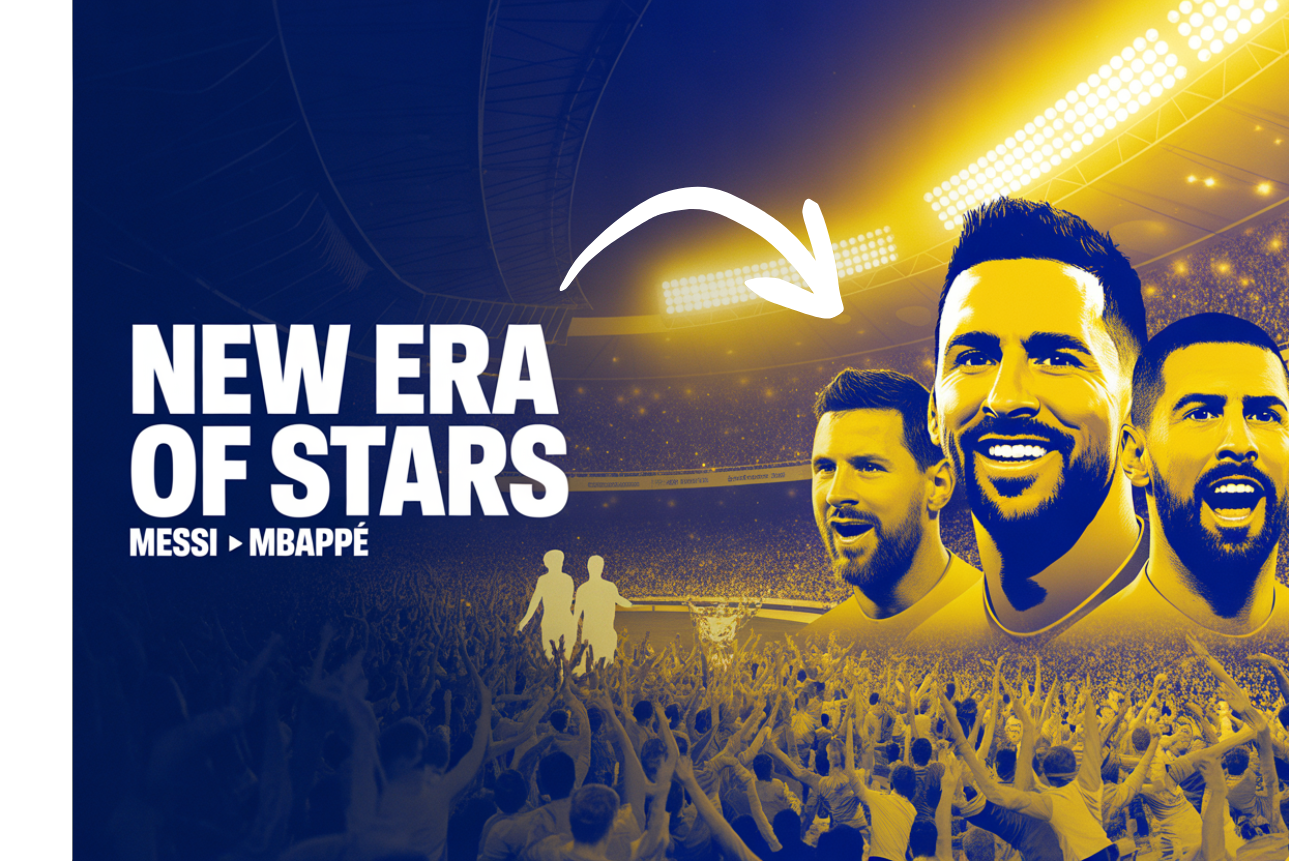
The era of Lionel Messi and Cristiano Ronaldo defined more than a decade of football. Their rivalry, brilliance, and dominance shaped the sport’s global narrative, captivating billions of fans. But as one generation steps back, a new wave of stars is emerging — rewriting what it means to be a football icon in the modern age.
The End of an Era
Messi and Ronaldo transformed football not just through goals and trophies but through influence. They elevated personal branding, inspired global fan cultures, and turned every match into a media spectacle. Between them, they amassed over 70 major titles and 1,600 career goals, setting records that may never be broken.
Yet time moves on. Messi, now in the twilight of his career with Inter Miami, continues to draw crowds in the United States, while Ronaldo remains a global ambassador for the game in Saudi Arabia. Their stories now represent legacy — not dominance.
The New Generation: Mbappé, Haaland, Bellingham
As the legends fade from the spotlight, a new generation is carrying football into its next era.
Kylian Mbappé embodies the modern superstar: fast, fearless, and globally marketable. At just 26, he’s already a World Cup champion and one of the most recognizable faces in sport. His recent move to Real Madrid symbolized a new chapter in European football — one centered around youth, athleticism, and global appeal.
Erling Haaland, meanwhile, represents the rise of data-driven excellence. His incredible efficiency in front of goal and machine-like consistency reflect football’s new era of athletic optimization. At Manchester City, he’s part of a tactical system that maximizes precision and intelligence over flair alone.
Jude Bellingham, still only in his early twenties, has become Real Madrid’s midfield talisman and a symbol of leadership beyond his years. He bridges the gap between the sport’s tradition and its future, blending discipline, creativity, and humility — traits that resonate deeply with fans.
The Changing Definition of Stardom
Today’s football stars live in a radically different ecosystem. The rise of social media, streaming, and digital fandom has changed how players connect with audiences. Unlike the controlled image-making of the Messi-Ronaldo era, modern stars cultivate their brands in real time — through Instagram posts, behind-the-scenes documentaries, and global sponsorships.
In many ways, fame has become more democratic. Players can now build influence outside of traditional powerhouse clubs or leagues. Think of stars like Vinícius Júnior, Khvicha Kvaratskhelia, or Sophia Smith in women’s football — each with massive followings and global recognition driven by personality and digital reach as much as on-field success.
Globalization and the New Football Economy
The globalization of football has accelerated this shift. Streaming services and social media have given fans access to every major league, from the Premier League to the Saudi Pro League and MLS. A player’s popularity is now as dependent on digital visibility as on televised performance.
Clubs, too, have adjusted — signing players not just for their ability but for their marketability. The line between athlete and brand ambassador has blurred, with players becoming cultural icons, influencers, and even entrepreneurs.
The Future of Football Stardom
As we move further into the 2020s, the idea of a single global superstar like Messi or Ronaldo may no longer exist. Instead, the game is entering an era of shared spotlight, where multiple players can dominate attention across different regions and platforms.
Football’s future will be defined not by one rivalry, but by a network of stars — each representing different styles, cultures, and generations. In that diversity lies the sport’s enduring power: its ability to evolve, inspire, and unite fans worldwide.
Leave a Reply