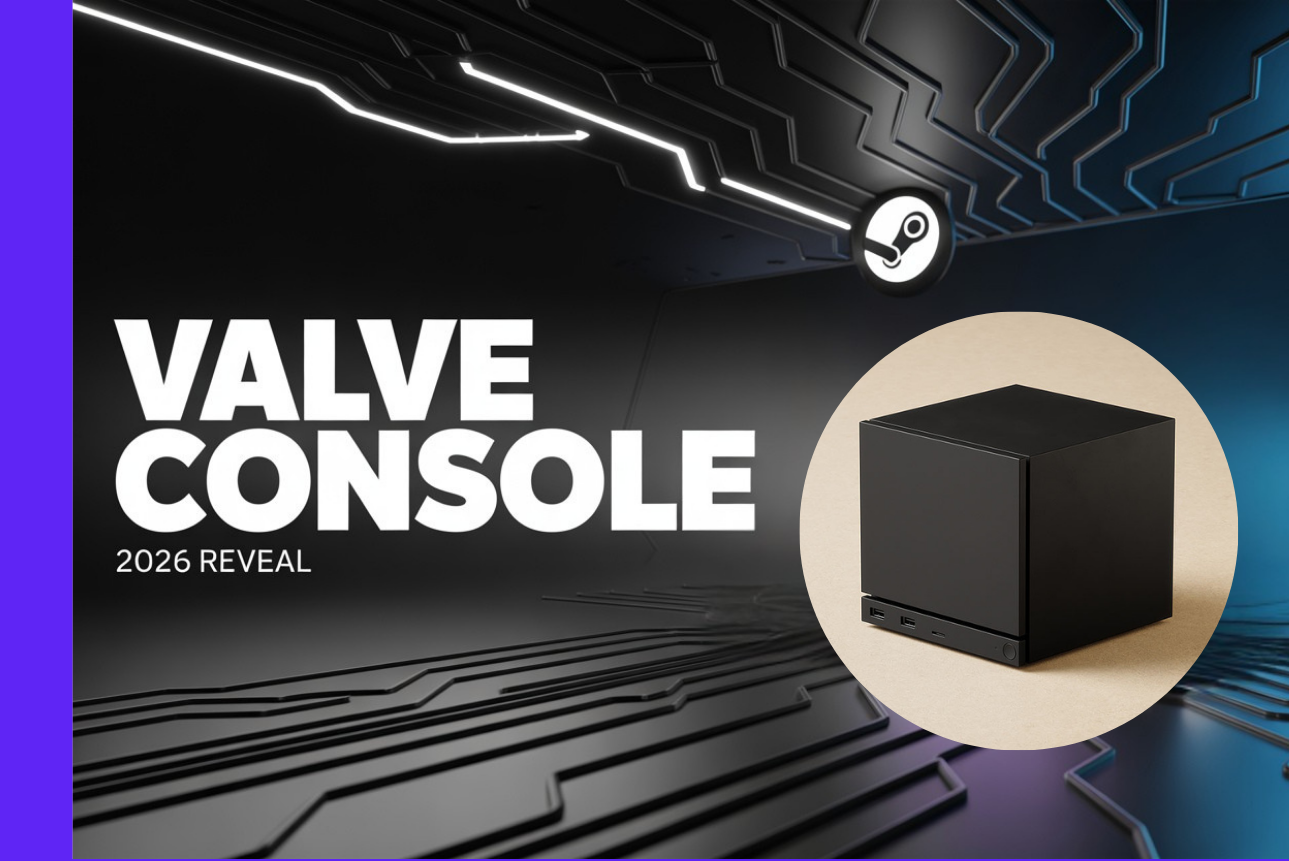
Valve has confirmed plans to launch a new console-style gaming device in early 2026 — a move that has caught the industry’s attention. Known informally as the next evolution of the “Steam Machine,” the device aims to bring PC power and the Steam library directly into the living room. As PC and console ecosystems continue to overlap, Valve’s hardware ambitions could meaningfully shift the gaming landscape over the next few years.
What Valve Has Announced
A New Living-Room-Focused Gaming Device
Valve’s upcoming hardware is designed as a compact, console-like system running SteamOS. Unlike traditional consoles, the device is expected to support the full Steam library while offering performance that far exceeds handheld hardware like the Steam Deck. Early details suggest a focus on 4K gaming, strong thermal design, and a streamlined, couch-friendly interface.
Expected Power and Features
While full specifications haven’t been officially published, Valve has described the device as significantly more powerful than the Steam Deck. Reports indicate it may feature an AMD Zen 4–based CPU paired with a custom RDNA-based GPU, making it capable of modern AAA performance in a box small enough to sit under a TV.
Additional expectations include:
- Seamless controller support
- A simplified TV-first UI
- Storage options comparable to modern consoles
- The flexibility to install other operating systems if desired
Launch Window and Pricing Signals
Valve has targeted an early-2026 release window. Pricing remains unconfirmed; however, the company has hinted that cost will be “comparable to a PC with similar specs.” That could make the device more expensive than traditional consoles — or highly competitive, depending on final configuration.
Why Valve’s Console Matters
Blurring the Line Between PC and Console
The device aims to offer PC freedom with console simplicity. For console players, it represents an approachable way to access Steam’s massive catalog. For PC gamers, it provides a streamlined, couch-ready system without the hassle of building or maintaining a desktop.
The push toward hybrid experiences is not new, but Valve’s ecosystem strength makes this effort one to watch closely.
Pressure on Traditional Console Makers
If Valve delivers strong performance and a polished living-room experience, Xbox and PlayStation may face new pressure around value, performance, and ecosystem flexibility. While exclusive titles remain a major advantage for traditional consoles, the appeal of an open, PC-like platform with a vast existing library could reshape how players think about upgrading hardware.
Implications for Developers
A new hybrid platform could encourage developers to optimize their games differently — especially around input, UI design, and performance targeting. The ability to build once for both PC and Valve’s console-style system may reduce development friction, particularly for smaller studios. Publisher strategies may also shift as hardware boundaries continue to soften.
Challenges and Open Questions
How Much Will It Cost?
Valve’s suggestion that pricing will align with PC-level specs raises a key issue: affordability. If priced too high, the device may appeal primarily to enthusiasts, limiting its mainstream impact. Conversely, a competitive price could make it a legitimate alternative to traditional consoles.
The Need for a Cohesive Couch Experience
A strong controller experience, intuitive interface, and consistent performance will be critical. PC-based systems have historically struggled to match console smoothness in living-room environments. Valve will need to demonstrate that SteamOS can deliver polish at the level console players expect.
Consumer Perception
Is this a console? A mini-PC? A Steam Deck for the TV? Valve’s messaging will play a major role in how the device is received. Clear positioning will determine whether the product becomes a disruptor or a niche experiment.
What to Watch Next
In the months ahead, key indicators will signal how seriously the industry should take Valve’s console effort:
- Final pricing and SKUs
- Global or limited launch regions
- Accessory bundles (controller, dock, storage tiers)
- Potential exclusive partnerships or first-party titles
- Developer adoption and optimization support
- Hardware competition from Sony, Microsoft, and Nintendo
If Valve executes well, the device could accelerate a shift toward unified, PC-driven gaming ecosystems — and meaningfully alter how living-room gaming is defined.
Conclusion
Valve’s planned 2026 console isn’t just another device launch — it’s a statement about where gaming is heading. As PC and console categories continue to merge, Valve is positioning itself at the center of that transition. Whether this system becomes a mainstream contender or a high-end niche product will depend on execution, pricing, and ecosystem polish. Still, it represents one of the most significant hardware developments on the horizon.
What do you think? If Valve offers competitive pricing and strong performance, would you consider replacing your console or gaming PC with it?
Leave a Reply