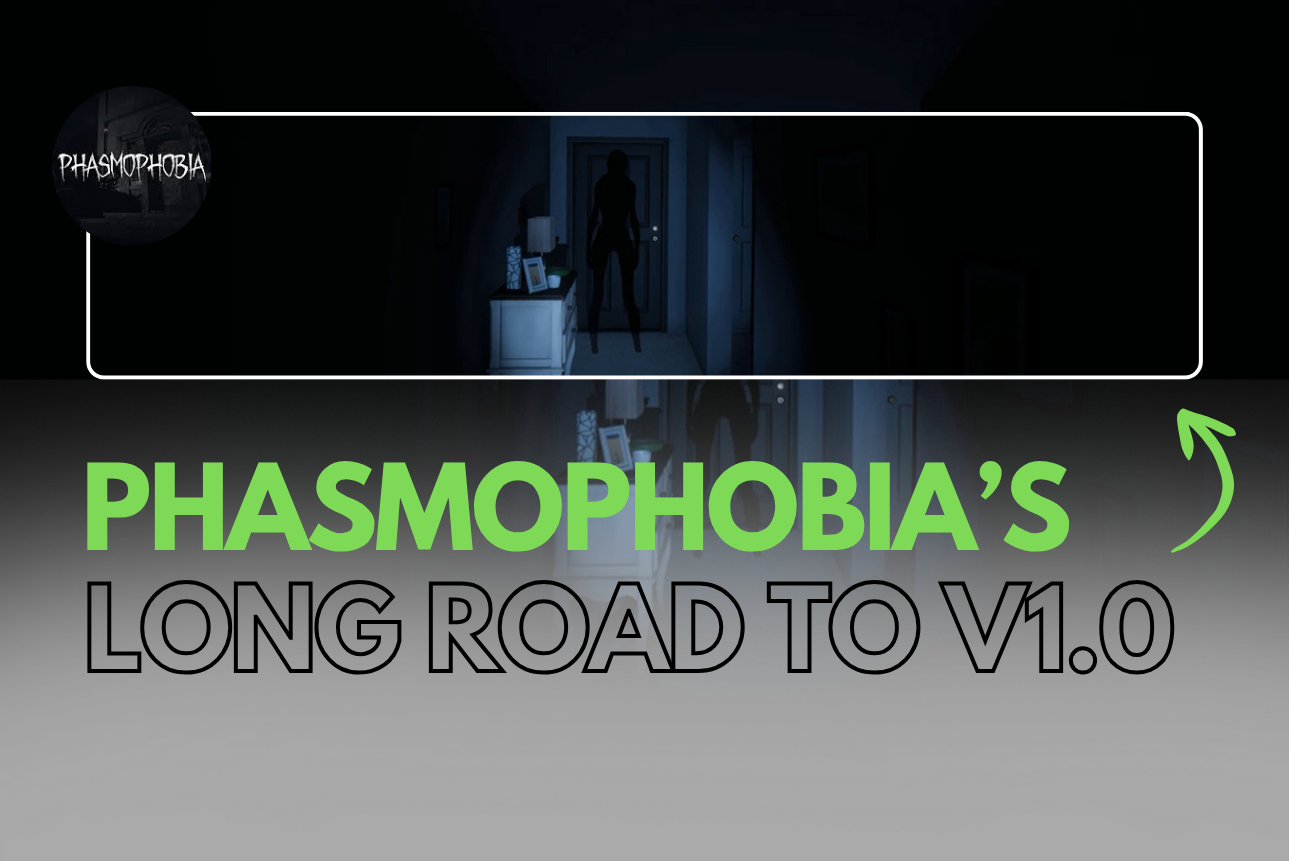
After five years in early access, this ghost-hunting hit is finally ready for its “finished” release — and that says a lot about the future of indie horror.
Introduction
Few indie games have captured the imagination of players quite like Phasmophobia. Released in early access back in 2020, the paranormal investigation co-op title became an overnight phenomenon — a mix of horror, teamwork, and chaos that turned friends into amateur ghost hunters.
Now, after five years of updates, bug fixes, and community feedback, developer Kinetic Games is preparing to launch version 1.0 — marking a major milestone not just for the studio, but for early-access development as a whole.
The Long Haunt: How Phasmophobia Got Here
Since its early-access debut, Phasmophobia has transformed from a small experimental horror game into a robust, evolving experience. Over time, Kinetic Games has:
- Added new maps and environments, from suburban houses to sprawling prisons and campgrounds.
- Expanded ghost types and behaviors, making each haunting feel unique and unpredictable.
- Reworked evidence systems and introduced new tools, improving how players investigate.
- Enhanced animations and visuals, making encounters more immersive — and terrifying.
The upcoming 1.0 update, expected before the end of 2025, will introduce:
- Improved character models and animations for smoother, more lifelike movement.
- Offline single-player support, letting players explore haunted locations without needing teammates.
- Quality-of-life upgrades and rebalanced difficulty for both new and veteran ghost hunters.
Kinetic Games has also made it clear that 1.0 isn’t the end — it’s just another step. As the developer told PC Gamer:
“If players are still there, we’ll still be there.”
Why It Matters
For Players
The shift to 1.0 brings stability and polish that early-access titles often lack. Players can expect:
- A more complete, reliable experience, perfect for both solo play and groups.
- Ongoing updates that build on the existing framework rather than rebooting it.
- A stronger foundation for new events, like seasonal updates or limited-time hunts.
It also reaffirms trust between developer and community — proof that patience can pay off when developers stay transparent and committed.
For the Industry
Phasmophobia’s evolution shows that early access isn’t just a testing phase — it can be a sustainable path to long-term success. With over 20 million copies sold and a passionate fanbase, Kinetic Games has demonstrated how smaller studios can thrive through community engagement and consistent iteration.
This approach could inspire more indie developers to:
- Use early access as a growth model, not a crutch.
- Support games with steady updates rather than one-off releases.
- Build communities that evolve alongside their projects.
What’s Next for Phasmophobia
With the 1.0 release on the horizon, fans can expect more than a final patch. Kinetic Games has hinted at future content drops, improved AI, and even deeper customization for investigators and ghosts alike.
In an era where co-op horror games often burn out fast, Phasmophobia’s continued success is rare. Its developers have shown that maintaining a game — nurturing it slowly rather than chasing quick sales — can lead to something enduring.
And with Halloween approaching, there’s never been a better time to jump back into a haunted house with friends (or alone, if you’re brave enough).
Conclusion
After five years of scares, screams, and spirit boxes, Phasmophobia is finally reaching its 1.0 milestone — but it’s clear that this is just the start of a new chapter.
The game’s journey from viral indie hit to polished, community-driven platform proves that slow, steady development can create lasting impact. For players, it’s an exciting return to form; for the industry, it’s a model worth studying.
Because sometimes, the best horror stories aren’t just about ghosts — they’re about how a small game refuses to die.
Leave a Reply