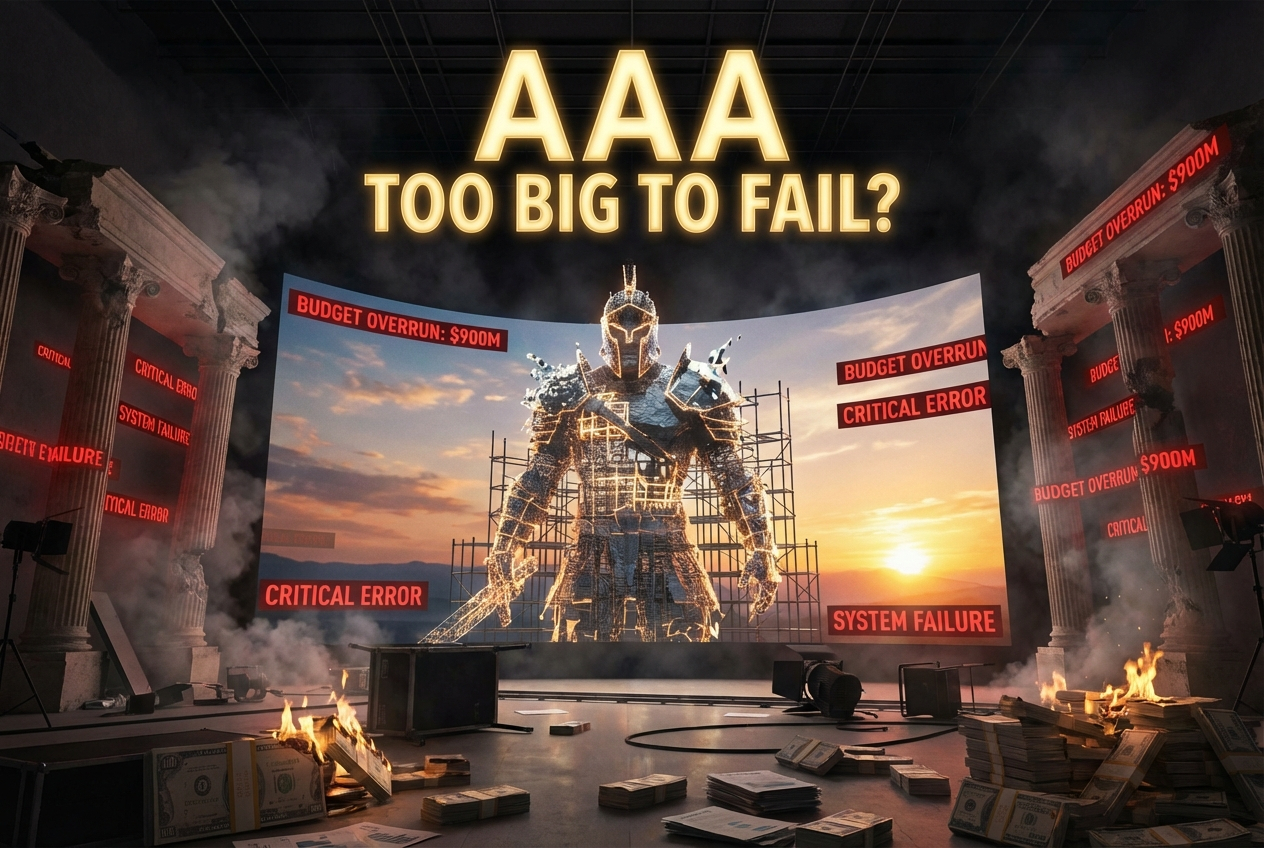
For more than a decade, the AAA games industry has chased scale. Bigger worlds, higher fidelity, cinematic storytelling, and global launches have pushed budgets into territory once reserved for Hollywood blockbusters. Today, it is no longer unusual for a major release to cost $150–300 million before marketing.
But that model is starting to crack.
Studios are laying off staff, publishers are cancelling projects, and even critically acclaimed games are being labeled “commercial disappointments.” The question is no longer whether AAA budgets are large — it’s whether they are still viable.
Quick Answer
$200M+ AAA game budgets are becoming unsustainable because development costs are rising faster than player spending and market growth.
Longer production cycles, higher expectations, live-service risk, and hit-driven economics mean fewer games can realistically break even, let alone succeed.
What Is the AAA Budget Crisis?
The AAA budget crisis refers to a growing imbalance between:
- Development and marketing costs, and
- The realistic revenue ceiling of even successful games
While sales numbers have grown modestly, costs have exploded — driven by technology, labour, and production complexity.
Mini-summary: Games are getting more expensive to make, but not proportionally more profitable.
Why AAA Game Budgets Have Exploded
1. Development Time Has Doubled
Modern AAA games often take:
- 5–8 years to develop
- Hundreds or thousands of developers
- Multiple global studios
Every extra year compounds:
- Salaries
- Infrastructure costs
- Opportunity cost
Delays no longer just affect schedules — they threaten financial viability.
2. Fidelity Expectations Are Ruthless
Players now expect:
- Near-photorealistic visuals
- Fully voiced dialogue
- Performance parity across platforms
- Massive, seamless worlds
Each incremental visual upgrade requires exponentially more effort, not linear gains.
3. Marketing Budgets Rival Development
A modern AAA release often spends:
- $100M+ on global marketing
- Influencer campaigns
- Platform partnerships
- Live-service launch support
In many cases, marketing equals or exceeds development cost — turning “success” into a moving target.
Why Even Successful Games Are Struggling
Sales Are No Longer Enough
Selling 5–10 million copies used to guarantee success. Today, it may only mean:
- Breaking even
- Underperforming against forecasts
Publishers now expect:
- Long-term monetization
- Recurring engagement
- Post-launch revenue streams
A great launch is no longer sufficient.
Live-Service Is High Risk, Not a Safety Net
Many AAA games attempt to justify budgets through live-service models. The problem:
- Only a few dominate attention
- Most fail to retain players
- Ongoing support increases burn rate
Live-service success is winner-takes-most, not evenly distributed.
The Human Cost: Layoffs and Cancellations
Major publishers including Microsoft, Sony, and Electronic Arts have all reduced staff or cancelled projects despite strong revenues.
Why?
- Fewer games can justify massive teams
- Portfolio risk is increasing
- Shareholders demand predictability
Mini-summary: The crisis isn’t about failure — it’s about risk management.
Why Publishers Are Becoming More Conservative
Fewer New IPs
New IPs are risky and expensive. As a result:
- Sequels and remakes dominate
- Established brands get priority
- Creative risk shifts to smaller studios
Fewer Mid-Tier Games
The middle ground between indie and AAA is shrinking:
- Too expensive to make cheaply
- Too risky to fund heavily
This creates an industry polarized between blockbusters and indies.
Can AI or New Tools Fix the Problem?
AI and automation may help with:
- Asset generation
- QA testing
- Early prototyping
But they also:
- Raise expectations
- Increase scope
- Encourage even bigger worlds
Prediction: AI reduces some costs but does not fundamentally solve the budget problem.
What Comes Next for AAA Games?
Likely Industry Shifts
- Smaller AAA-scale projects
- More controlled scope
- Greater reuse of engines and assets
- Longer gaps between major releases
Less Likely
- Endless budget growth
- Guaranteed profitability at launch
- Risk-free live-service bets
Final Verdict
The AAA budget crisis is not a temporary downturn — it’s a structural problem. As $200M games become the norm, the margin for error disappears. One underperforming release can now destabilize an entire studio or publisher. Unless scope, expectations, or business models change, the industry will continue to contract around fewer, safer bets.
The future of AAA gaming may not be bigger games — but smarter ones.
Frequently Asked Questions
Are AAA games too expensive to make now?
Yes. Costs have outpaced sustainable growth.
Why don’t higher prices fix the issue?
Raising prices risks shrinking the audience without guaranteeing revenue gains.
Is live-service the solution?
Only for a small number of dominant titles.
Will AAA games disappear?
No, but fewer will be made, and with tighter scope.