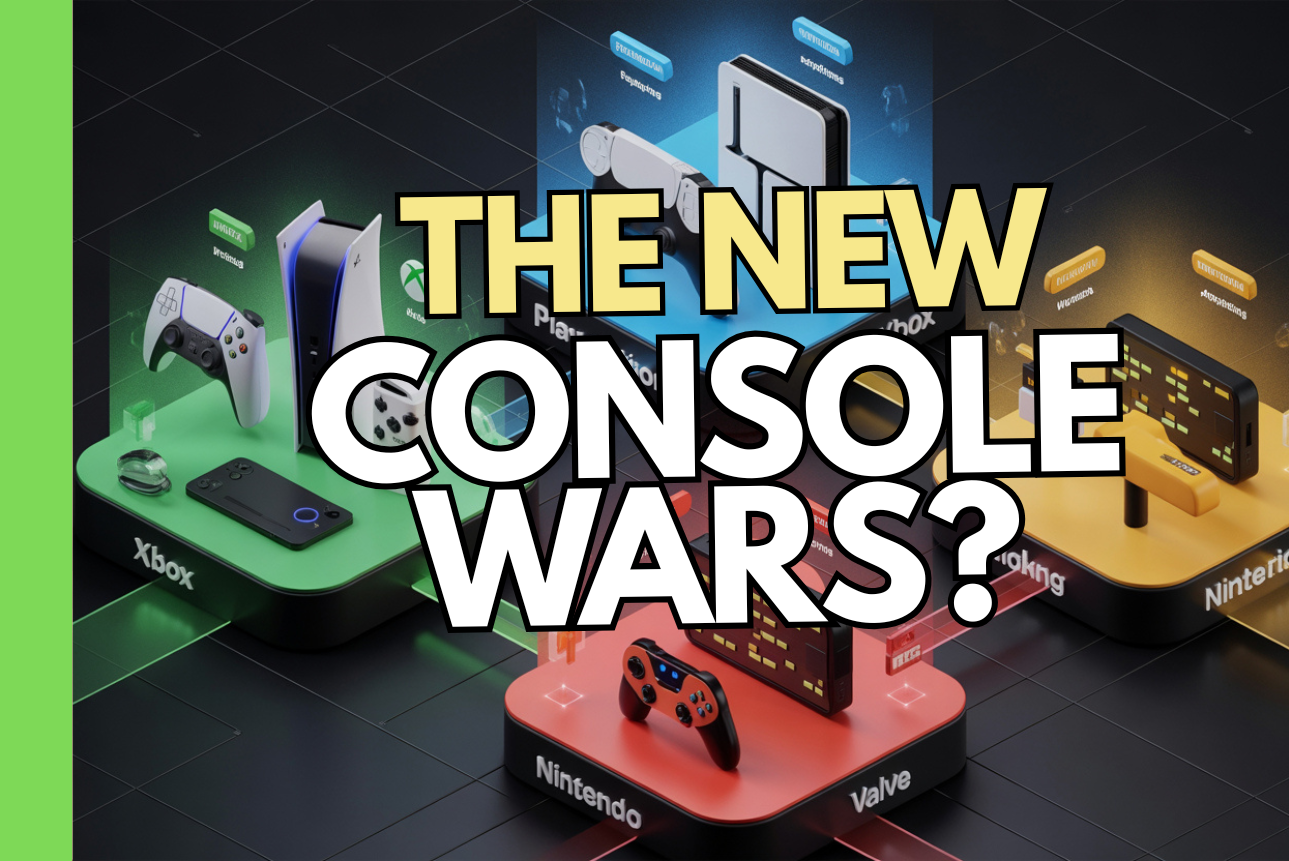
For decades, the console war was defined by teraflops, exclusive titles, and hardware specs. But as we move deeper into the 2020s, the real battlefront has shifted. PlayStation, Xbox, Nintendo — and now Valve — are no longer fighting over who builds the most powerful machine. They’re fighting over something more valuable: ecosystems.
In today’s gaming economy, the platform that wins is the one that keeps users locked in, engaged, and continuously spending — no matter which device they’re on.
Hardware Is No Longer the Primary Differentiator
For most players, the performance gap between modern consoles has narrowed. Whether you’re on a PS5, Xbox Series X/S, or future hardware from Valve or Nintendo, the experience is more comparable than ever. With diminishing visible differences, the strategic advantage has shifted away from specs and toward services, content pipelines, subscriptions, and long-term engagement loops.
This is why the “console war” is increasingly platform-agnostic. The real metrics aren’t GPU power or SSD speed. They’re:
- Monthly active users
- Subscription conversion
- First-party content cadence
- Cross-platform reach
- Network retention
- Average revenue per user (ARPU)
The winners are those who build ecosystems that outlive their devices.
PlayStation: The Prestige Content Ecosystem
Sony still leans heavily on premium single-player exclusives — a strategy that maintains brand strength and showcases technological excellence. But even Sony is adapting, expanding its ecosystem through:
- PlayStation Plus tiers with classic libraries
- PC ports to widen the funnel
- A growing emphasis on live-service projects
- Cross-media expansion via films and TV
Sony’s ecosystem is broadening from “premium hardware = premium experience” to a multi-platform entertainment pipeline anchored by strong IP.
Xbox: The Subscription-First Strategy
Microsoft has embraced an ecosystem that stretches across console, PC, cloud, and even competing platforms. The centerpiece is Game Pass, designed not as a console booster but as a platform-agnostic subscription business.
Xbox’s strategy hinges on:
- Cloud-native access
- Cross-platform play
- Integration with Windows
- Acquisitions feeding content into Game Pass
- A device-light approach: “play anywhere you want”
Microsoft is less concerned with selling consoles and more focused on growing recurring revenue. In this model, the “console” is just one device among many.
Nintendo: The Experience Ecosystem
Nintendo’s strength is not raw performance — it’s cultural ubiquity. Its ecosystem extends across:
- Hardware uniquely tied to gameplay identity
- Evergreen IP (Mario, Zelda, Pokémon)
- Merchandising
- Theme parks
- Mobile games
- Cross-media presence
Nintendo prioritizes timeless engagement over bleeding-edge tech, creating a cohesive identity that keeps players loyal across generations.
Valve: The Steam Ecosystem Expands Into Living Rooms
Valve’s push into console-style hardware (Steam Deck, upcoming home console devices) marks a new phase in the ecosystem war. Rather than building traditional hardware, Valve is extending the gravitational pull of Steam, the dominant PC platform.
This expansion positions Valve as an ecosystem provider that spans:
- Handhelds
- PCs
- Living-room TV devices
- VR headsets
Valve isn’t trying to win a console war — it’s trying to absorb it into its existing digital ecosystem.
Ecosystems Drive Profit — Not Hardware
Hardware cycles are expensive, risky, and increasingly commoditized. Ecosystems, by contrast, generate:
- Recurring monthly revenue
- High-margin digital sales
- Player stickiness
- Cross-device engagement
- Long-term customer relationships
In business terms, ecosystems:
- Reduce churn
- Increase lifetime value (LTV)
- Decrease reliance on hit-driven sales
- Provide predictable earnings for investors
This is why the “console war” is no longer about who sells the most boxes — it’s about who keeps the most users inside their revenue loop.
The Future Is Multi-Device, Multi-Service, and Multi-Platform
The next phase of the industry will revolve around service stacking, modular hardware, and multi-platform publishing. Expect:
- More PC/console hybrid releases
- Cross-platform ecosystems replacing platform exclusivity
- Streaming and cloud gaming expanding into mobile
- Subscription bundles (games + media)
- Hardware that supports services, not defines them
The companies that thrive will be those that build sticky ecosystems, not those that launch the most powerful machines.
Conclusion
The traditional console war is over. The new battle is for ecosystem dominance, where hardware is just one piece of a much larger strategic puzzle. Whether through prestige exclusives, subscription services, hybrid hardware, or cross-media IP expansion, each major player is building a long-term revenue engine that extends far beyond the physical console itself.
Question for readers: Which ecosystem do you think is best positioned to dominate the next decade — and why?
Leave a Reply