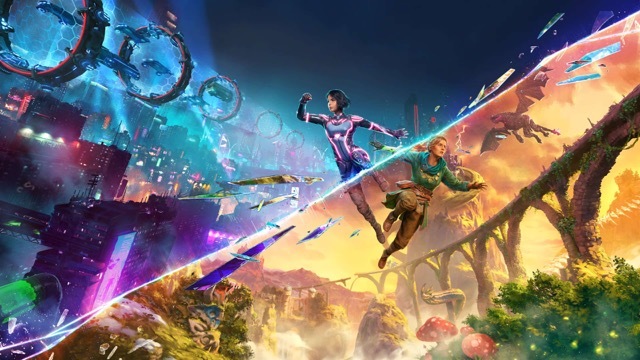
Every year there’s that one co-op game that dominates conversations, sparks memes, and becomes the go-to recommendation for anyone looking to play with a friend. In 2025, that game is Split Fiction. Developed by Hazelight Studios, the minds behind the award-winning It Takes Two, this latest release has managed to raise the bar for cooperative storytelling in gaming.
The Premise
Split Fiction throws players into the lives of two writers, Mio and Zoe, who suddenly find themselves trapped inside their own novels. Mio writes science fiction, Zoe writes fantasy—and as the game progresses, their worlds start to collide in ways neither of them expected. The only way forward is by working together, navigating through environments that constantly shift between futuristic landscapes and magical realms.
It’s a concept that sounds ambitious on paper, but Hazelight has a track record of making wild ideas work. Just as It Takes Two seamlessly blended genres and mechanics, Split Fiction goes even further, offering players experiences that range from high-tech space battles to enchanted forests full of mythical creatures.
Gameplay That Demands Cooperation
What sets Split Fiction apart from most co-op titles is how deeply it integrates teamwork into every aspect of the game. This isn’t just about solving puzzles together or taking down enemies in tandem; it’s about using the unique strengths of sci-fi and fantasy to progress. One player might be hacking futuristic security systems, while the other wields enchanted tools to clear obstacles in a forest. The game constantly forces you to think creatively and communicate with your partner.
The result is a co-op experience that feels fresh, challenging, and endlessly surprising. There’s no “carry” option here—you succeed or fail as a team. For players who love true cooperation, this is exactly what makes Split Fiction so satisfying.
Visuals and Storytelling
Running on Unreal Engine 5, Split Fiction looks stunning. The contrast between the sleek, neon-lit sci-fi backdrops and the lush, magical fantasy settings creates a visual rhythm that keeps the game exciting. One minute you’re sneaking through a futuristic cityscape, the next you’re battling through a kingdom of dragons.
As for the story, it’s immersive and layered, though not without its criticisms. Some players feel the rivalry between sci-fi and fantasy leans a little too heavily into clichés. Still, the writing shines when it focuses on the evolving bond between Mio and Zoe. Their journey from rivals to reluctant partners—and eventually allies—is what makes the experience resonate on an emotional level.
The Impact So Far
Since its launch earlier this year, Split Fiction has sold millions of copies and quickly earned critical acclaim. Reviewers have praised its creativity, genre-bending gameplay, and emotional payoff. Some even argue it could be the best co-op game ever made.
Of course, not everyone agrees. While many players love the constant variety, others feel the story takes a while to find its footing. The sci-fi levels, in particular, have been described as less inspired than the fantasy ones. But even critics who point out flaws admit that the cooperative gameplay itself is unmatched.
Final Thoughts
Split Fiction isn’t just another co-op game—it’s a bold step forward for the genre. Its willingness to blend two very different worlds, demand true teamwork, and constantly surprise players makes it a standout release. The narrative might not be perfect, but the gameplay magic more than makes up for it.
If you haven’t tried it yet, grab a friend, dive in, and see for yourself why this game has become the co-op experience everyone is talking about.
Leave a Reply